A routine refrigerant-pressure check at a property in 10013 revealed more than expected.
MainDuct technicians are skilled not only in regular cleaning services, such as air duct cleaning, AC cleaning, dryer vent cleaning, and chimney sweeping, but also in diagnosing system problems.
They also understand how these systems should operate, which applicable codes and regulations their configurations must comply with, and what may cause certain problems.
That is why the routine refrigerant pressure check in 10013 turned into an outdoor heat pump unit installation. It was found that the pressure was within normal limits, but one of the compressor windings was shorted to ground, and the power filter board was damaged.
The process of installation went as follows:
We started with a quality check and re-flaring of refrigerant lines. (Flaring is the process of preparing pipe joint locations for a tight seal at the contact point.)
This was followed by the initial integrity check of the indoor units’ electrical circuit.
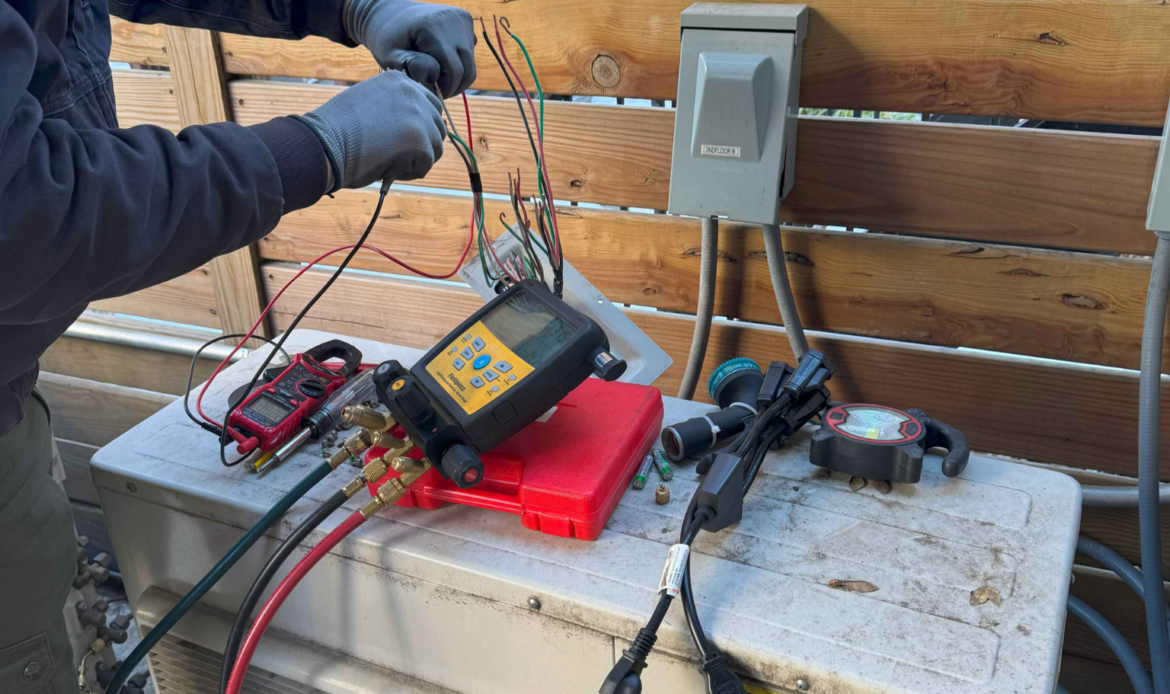
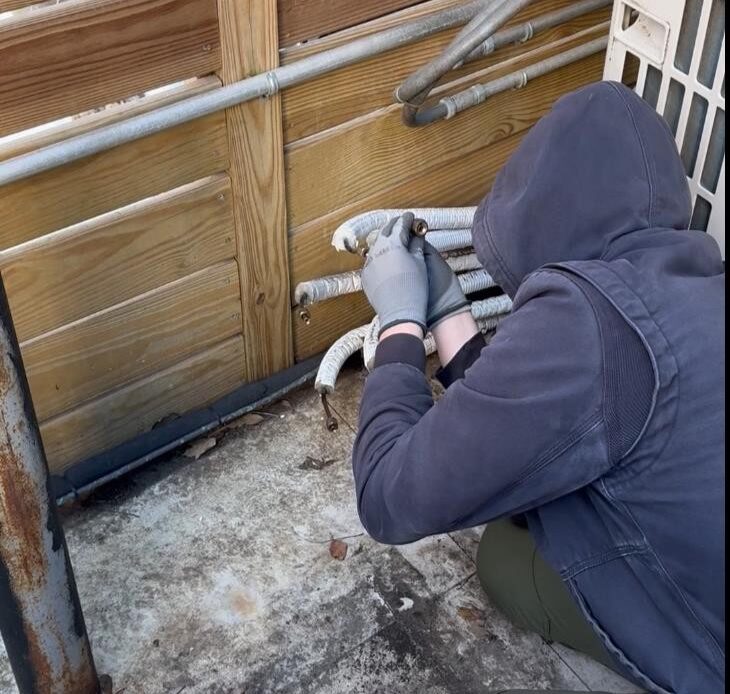
Next was the process of pressure testing the refrigerant circuits (branches) to check for integrity (presence of leaks). The photo shows equipment being connected in pairs to the refrigerant lines for nitrogen pressure testing.
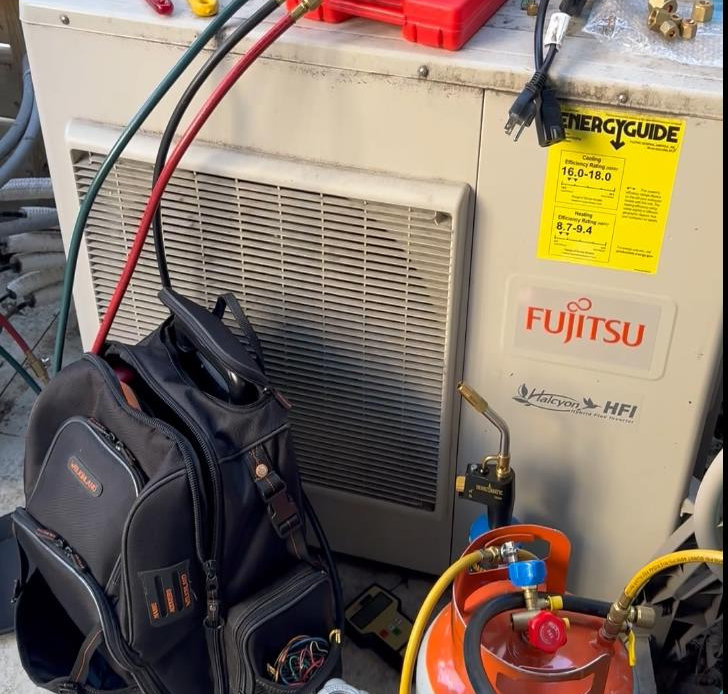
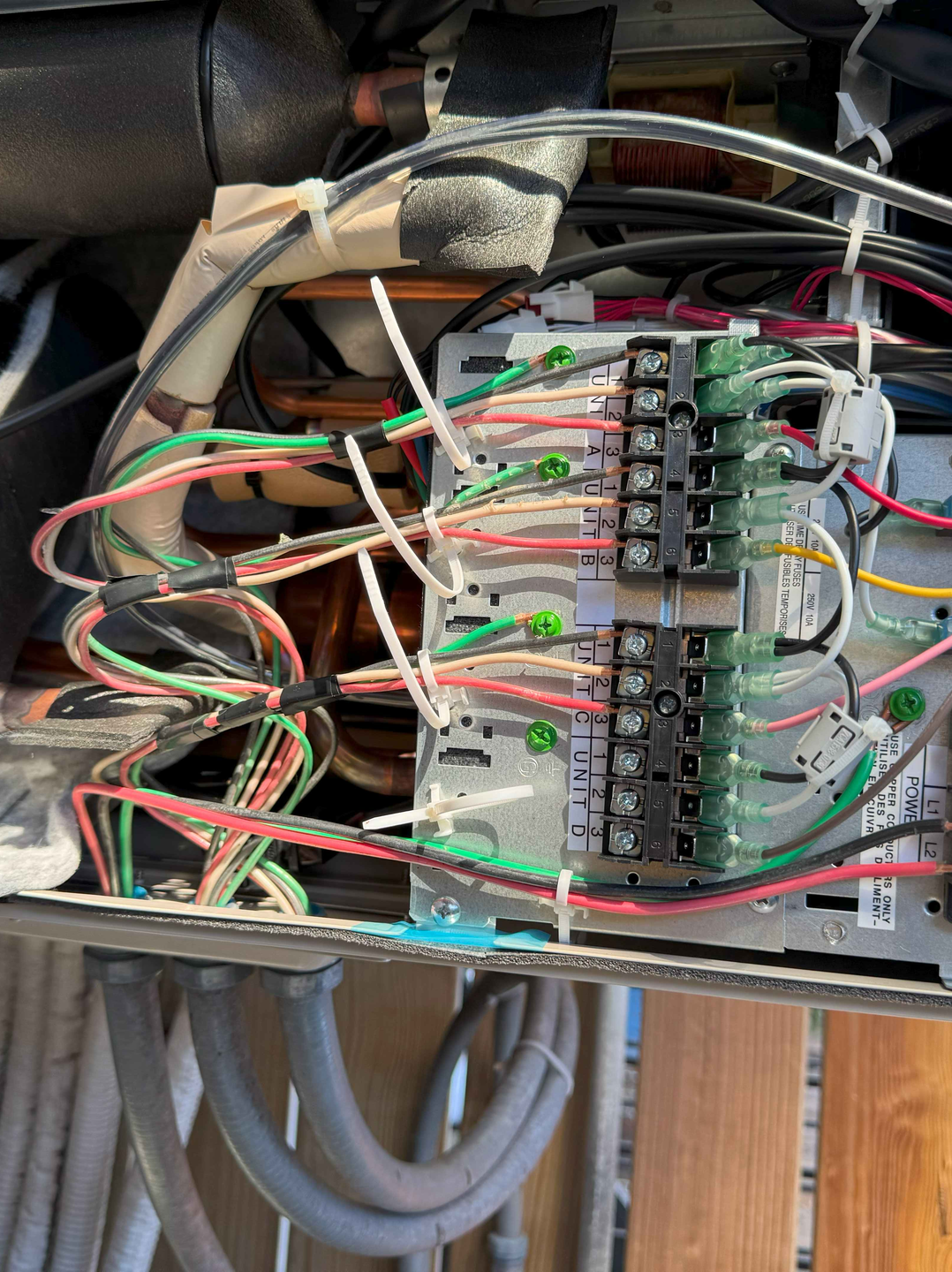
Then came commissioning and calibration of the interaction between indoor and outdoor equipment, as well as optimizing energy efficiency. The photo shows the electrical connection of power and communication lines from the indoor units to the outdoor unit.
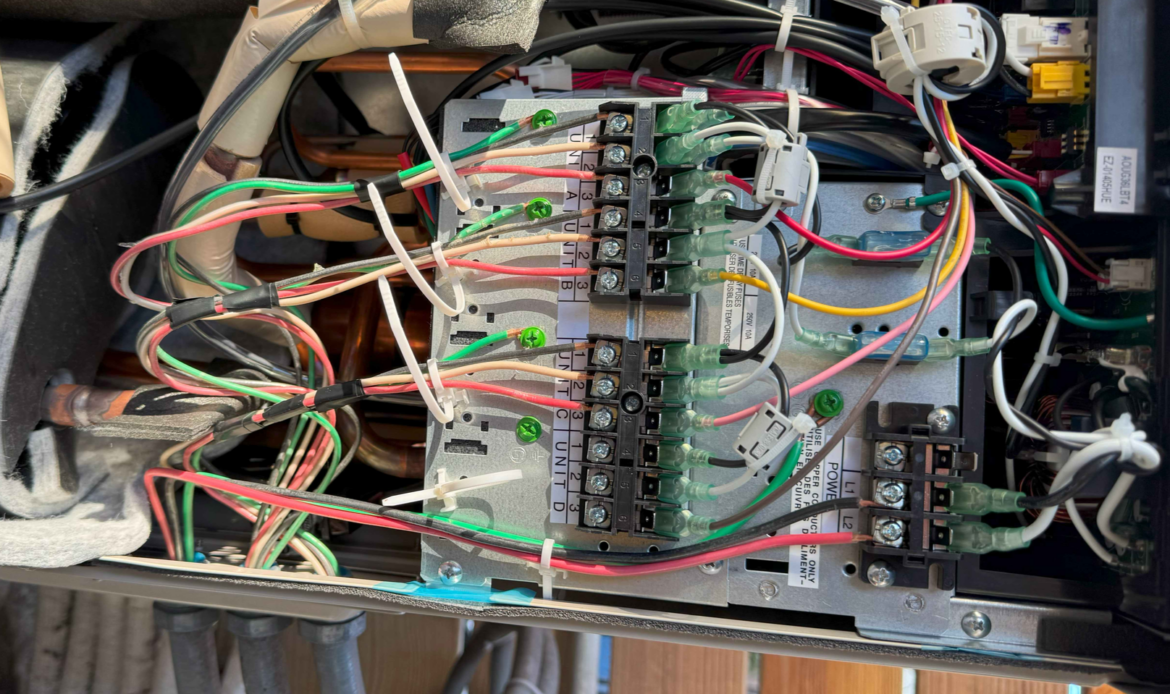
Lastly, optimization of energy efficiency and dynamic balancing of the refrigerant circuit under high load.
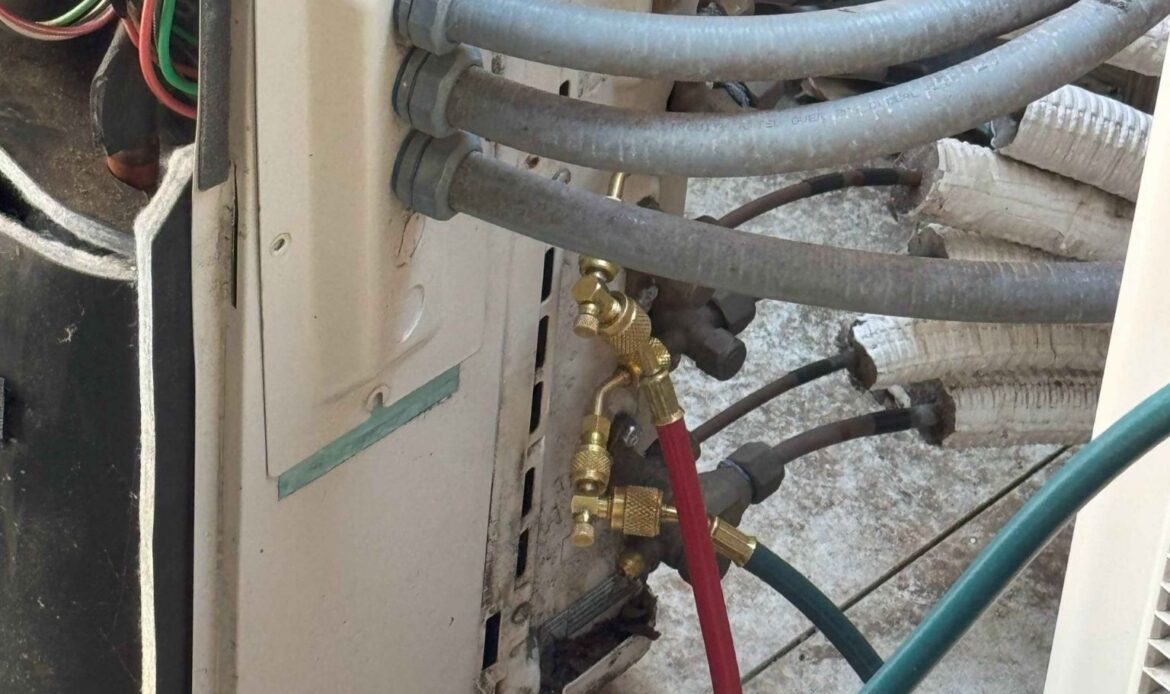
During the annual maintenance (cleaning and sanitizing) of the indoor units, it is recommended to check the static and dynamic refrigerant pressure, comparing it with previous year’s records. If necessary, perform an energy-efficiency optimization. This can save significant amounts of money and electricity by ensuring your equipment operates within its designed parameters. Furthermore, this practice extends the lifespan of the expensive equipment.
During the replacement of the outdoor condenser, a mandatory integrity check of the refrigerant circuits revealed a slight leak in circuit No. 3, which the homeowners should monitor.
It is important to locate and eliminate the leak in the off-season, when there is low demand for cooling/heating.
This leak could have contributed to the failure of the outdoor unit, as the decrease in pressure reduced the efficiency of the equipment, requiring more operating hours to reach the set temperature.
Furthermore, fluctuations in the refrigerant quantity led to a decrease in the cooling efficiency of the hermetic compressor’s electric motor, which could contribute to overheating and eventual failure.
Once the condenser was installed, it was commissioned to ensure optimal performance.
If your heat pump or air-conditioning system has not been professionally maintained recently, schedule an inspection before the heating season.