I want to share the top five mistakes HVAC companies make, the ones that cost clients dearly in energy bills, or much worse, their health. At MainDuct Inc., we encounter these problems so often that I can confidently say: this is a systemic issue in the industry, not just a New York anomaly.
In my opinion, there are several root causes for this phenomenon: ever-growing energy efficiency requirements, tighter construction deadlines, and building fads, all of which, combined with the drive for maximum profit, lead to underqualified final contractors who evaluate projects and perform installations. It’s at this stage that most of the mistakes originate, the ones clients ultimately pay for.
Below are the five most common, and most expensive for property owners, HVAC errors.
Mistake #1
Unit Selection by House Size and Design Efficiency
Choosing a unit based solely on the house’s square footage and volume, sometimes factoring in the number of occupants and the building’s design energy efficiency, but without thoroughly verifying actual heat loss figures post-construction – is a bad idea. All too often, as-built buildings deviate significantly from the project plans due to poor material quality or violations of manufacturer installation requirements. In these cases, the equipment either can’t handle the load or operates inefficiently. Whereas homeowners often don’t understand why their electricity or gas bills end up so high.
Problems often arise during renovations, as budgets typically do not account for a high-quality, systematic approach to insulation and strict oversight of all execution stages. An HVAC project isn’t just about unit capacity. It’s also about real heat losses: Is the attic insulated? How many windows are there, and what kind? What frame materials were used, and how were the window and door reveals done? What are the walls made of? Is zoning accounted for? Do you need to evenly cool or heat the entire house, including rooms that are rarely used? How is heat distributed during seasonal transitions from winter to summer and back? In the end, the owner pays for the equipment and installation but doesn’t get the expected results, and keeps overpaying on bills even after major capital expenditures on gear.
Mistake #2
Trendy Flat Ceilings
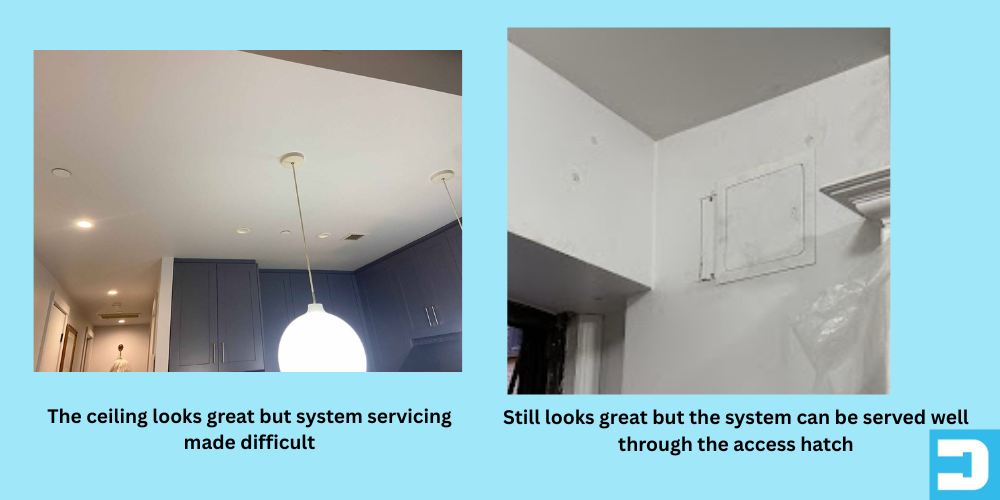
The scourge of our time is installing modern suspended ceiling systems without permanent access hatches. Hatches provide quick access to equipment, while their absence leads straight to mold, leaks, and system failures. These problems usually don’t appear until after the warranty expires, leaving clients to pay for costly rework.
Why does this happen? People expect ceilings to be flat and beautiful, without technical openings or hatches – just like old concrete ceilings used to be. But modern ceilings hide complex engineering systems behind them, while expectations of their looks remain the same. Personally, I would like to note that a properly installed hatch doesn’t detract from the room’s appearance or livability at all, it only makes maintenance much easier and significantly extends system lifespan.
Mistake #3
Internally Insulated Ducts
Factory-assembled ducts with internal fiberglass insulation are hugely popular today. Their installation is genuinely convenient, but they come with serious operational drawbacks. These ducts typically lack access hatches – which is wrong for maintenance. All HVAC systems, whether new or old, need an adequate number of access points.
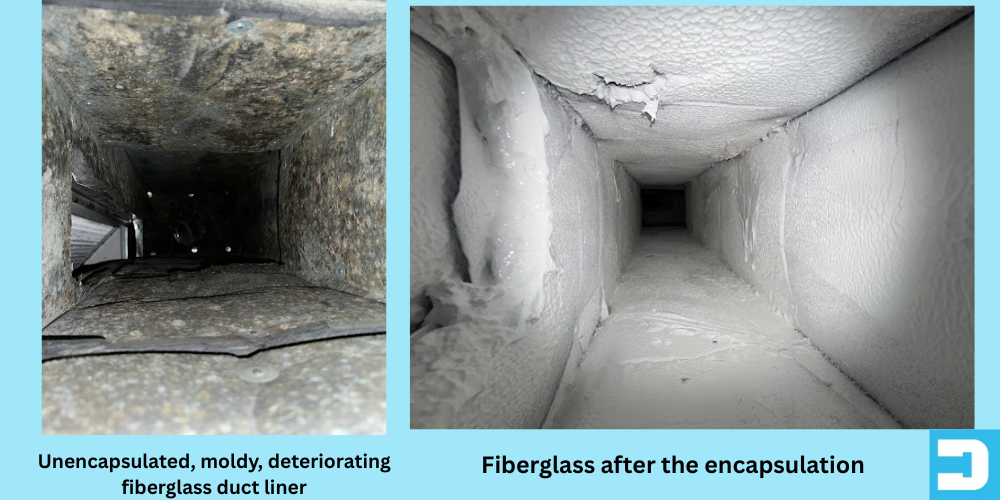
Plus, internal fiberglass insulation should ideally be encapsulated right upon installation. Almost nobody does this due to its cost. Without encapsulation, two major risks emerge.
First – mold: Fiberglass holds moisture really well, and when contaminated with organic particles, the environment becomes perfect for mold growth. Growth usually starts near the unit and at bends, where condensate and debris create the best conditions. From there, mold spreads rapidly throughout the system and into rooms. Second risk – the fiberglass itself. This fibrous material inevitably breaks down over time, sending fibers into the airstream and then right into occupants’ respiratory systems. This effect only worsens as the system ages.
Mistake #4
Cheap Filters
Air filtration is a separate, critically important, and often underestimated element of HVAC systems. Installers frequently recommend low-efficiency filters because they don’t create additional air resistance and don’t require intake system modifications, making installation easier.
For clients, this means system contamination. Fine particles like skin flakes or cotton fibers pass through the filter, settle on coils and fiberglass insulation, become food for mold, and eventually ruin drainage pumps. Factory filtration systems are almost never adequate – most need upgrading.
Mistake #5
Drainage Problems
The best solution is passive drainage. But forced drainage pumps are often used instead because they’re easier to design and install. And instead of external pumps, onboard solutions are typically employed. Onboard pumps themselves aren’t problematic if units are regularly serviced and accessible. But in practice, things aren’t so neat. Onboard pump sensors clog quickly, need cleaning along with the coils, and access to them is often limited or nonexistent.
As a result, after two to three years of operation, usually after the warranty expires, failures begin. That’s why installing an external drainage pump from the start with new equipment makes more sense.
Conclusion
In HVAC, mistakes never happen alone.
One pulls another along, and eventually the entire system starts falling apart.
This almost always shows up two to three years after installation, already beyond the warranty.
Accounting for it from the start means paying for a well-thought-out design. Ignoring it means paying many times more for rework and bills later.