


Codes and regulations, whether local, state or international—are often said to be ‘written with blood.’ While this may sound gruesome, it accurately reflects reality. Many safety regulations and standards have been developed in response to past tragedies and loss of life. These codes exist to protect people by preventing the recurrence of such incidents.
Unfortunately, despite these safeguards, some HVAC service providers still tend to cut corners, neglecting the requirements, which can put lives and property at risk. Or they simply lack professional knowledge to accurately apply code information to their services.
This is why professional HVAC Code Compliance Services are essential — they ensure that every system is designed, installed, and maintained according to the latest safety and efficiency standards, minimizing risk and maximizing long-term performance.
Codes and Regulations HVAC Professionals Work Closely With
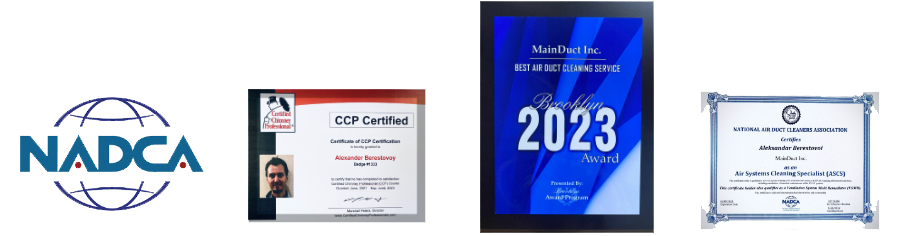
National Air Duct Cleaners Association is a trade association founded in 1989 by a group of professional air duct cleaning companies to represent the HVAC inspection, cleaning, and restoration industry.
It was established to develop and promote standards, education, certification, and ethical practices for HVAC system cleaning and restoration professionals, ensuring quality and safety in the industry – to improve the industry’s credibility.
NADCA develops industry standards such as ACR, The NADCA Standard which sets minimum procedural and performance requirements for assessing, cleaning, and restoring HVAC systems to ensure cleanliness, safety, and energy efficiency. It also provides general specifications for commercial HVAC system cleaning projects.
2. New York State Mechanical Code (MCNYS)
New York State Mechanical Code (MCNYS) is regulated by state officials. It was created to establish minimum requirements for the design, installation, and maintenance of mechanical systems in order to protect public health, safety, and welfare, while allowing the development of new materials and technologies. It is a legally adopted state code based on the International Mechanical Code (IMC).
It regulates mechanical systems including HVAC, appliances, venting, ductwork, combustion air, hydronic and solar systems. Hiring a local HVAC building code expert is often a worthwhile investment, as they can provide high-quality work at slightly higher cost than less qualified providers.
3. National Fire Protection Agency Standard No. 211 (NFPA 211)
NFPA (National Fire Protection Association) is a nonprofit organization founded in 1896 by insurance companies and fire safety experts.
NFPA 211 is a standard specifically focused on chimneys, fireplaces, vents, and solid fuel-burning appliances.
It provides comprehensive guidelines for the construction, inspection, maintenance, and repair of chimneys to reduce fire hazards and carbon monoxide risks.
NFPA 211 covers chimney construction details such as clearances, materials, height requirements, ventilation, and drafting.
4. American Society of Heating, Refrigerating and Air-Conditioning Engineers (ASHRAE)
ASHRAE is a global professional association that focuses on advancing HVAC&R (heating, ventilation, air conditioning, and refrigeration) technologies to promote a sustainable world. It develops widely recognized standards and guidelines covering system design, indoor air quality, ventilation, energy efficiency, and testing procedures.
ASHRAE standards such as Standard 90.1 (Energy Standard for Buildings), Standard 62.1 (Ventilation for Acceptable Indoor Air Quality), and Standard 111 (Testing, Adjusting, and Balancing of HVAC Systems) are frequently referenced or adopted by building codes and regulatory agencies, ensuring safe, efficient, and high-performance HVAC systems.
If you’re upgrading your system or installing a new one, it’s essential to hire a contractor experienced in ASHRAE compliance HVAC installation — this guarantees adherence to key standards like 90.1, 62.1, and proper system balancing.
You can locate qualified pros via ASHRAE or ACCA.
5. Environmental Protection Agency (EPA)
The EPA is a U.S. federal agency established in 1970 to protect human health and the environment. It regulates refrigerants under Section 608 of the Clean Air Act, which governs the handling, recovery, recycling, and disposal of ozone-depleting substances and greenhouse gases used in HVAC systems.
The EPA also certifies HVAC technicians for proper refrigerant handling and enforces refrigerant phase-out schedules to reduce environmental impact.
Why HVAC Technicians Don’t Comply With Codes
1. Cutting Costs
There are two main reasons why contractors or HVAC technicians sometimes fail to meet established codes and standards, with the most obvious—and likely the most common—being their desire to reduce expenses.
For example, flexible ducting is often used in dryer vent installations because it is significantly cheaper and quicker to install than rigid metal ducting; however, this practice is not compliant with codes. Both the MCNYS and NFPA 211 provide strict guidelines: ducts must be made of metal with a minimum thickness of 0.016 inches (0.4 mm) and have a smooth interior surface. The duct diameter should be 4 inches (referencing MCNYS 504.8.1 and NFPA 211 10.7.3.8).
This means that every instance of flexible ducting in dryer vents represents the use of substandard materials. Although the service costs the same to the client, homeowners receive solutions that are neither code-compliant nor safe, resulting in increased fire risks.
The solution to this specific non-compliance is dryer vent replacement with proper materials.


Dryer Exhaust Vent Installation Process
One important note about flexible ducting in dryer vents: dryer transition hoses do need to be flexible, but they must meet specific requirements. The transition duct connecting the dryer to the exhaust system must be less than 8 feet in length and must be labeled and listed in accordance with UL 2158A (referencing MCNYS 504.8.3 and NFPA 211 10.7.3.10).


When there is no specific code regulating a material, contractors might opt for cheaper alternatives. For example, in the case of installing dryer dampers—where ventilation is regulated but material is not—some companies choose plastic over metal because it is much cheaper (and far less durable). Of course, the price charged to the client remains the same.


Another common way to reduce costs is by rushing through system or appliance cleaning, resulting in poor-quality work. Air ducts and dryer vents require specialized equipment and must be cleaned thoroughly along their entire length. Accessible parts of air conditioning units and fans should be carefully dismantled and cleaned separately to ensure optimal performance. Similarly, dryer machines themselves need thorough cleaning to maintain efficiency and safety, as electrical components must not be surrounded by flammable lint. Therefore, if a technician completes the cleaning suspiciously quickly, it may be a cause for concern regarding the quality and completeness of the service.


2. Lack of Licensing or Professional Knowledge
A common reason technicians fail to follow industry standards is a lack of professionalism, often coupled with insufficient training and a lack of appropriate HVAC licensing.
HVAC system maintenance is inherently complex due to the technical intricacies of modern systems and appliances.
Using dryer vent installation as an example, improper practices such as using screws inside ducts to secure joints create lint traps, and inadequate sealing leads to air leaks. Screws protruding into ducts catch lint, increasing fire risk, while loose connections allow moisture and lint to escape into the home—this remains a relatively common mistake. (Referencing MCNYS 504.4)


Venting dryers into attics, crawl spaces, or indoors instead of outdoors can cause moisture buildup, mold growth, and fire hazards. Outdoor terminations must have proper hoods with dampers to prevent pest entry and lint accumulation. (Referencing NFPA 211 10.7.3.3)


Freon (refrigerant) balancing is another complex task prone to errors. The correct refrigerant charge is critical: insufficient refrigerant reduces heat absorption, causing the evaporator coil to become too cold and potentially ice over. Additionally, the compressor may overheat because refrigerant also cools the compressor motor windings. Conversely, excess refrigerant raises system pressures, which can cause liquid refrigerant to flood the compressor, leading to “liquid slugging” and compressor failure. Overcharging can also cause frozen coils due to improper evaporation and may result in noisy operation such as knocking or squealing. It can cause the system to trip circuit breakers or shut down to prevent damage.
Both undercharging and overcharging reduce cooling effectiveness, leading to insufficient indoor comfort. The system works harder and longer to reach the desired temperature, increasing energy costs. Both conditions can damage the compressor—the most expensive component to repair or replace—and reduce overall system lifespan.


Refrigerant handling is regulated because refrigerants are environmentally hazardous substances. The types allowed for use are continuously updated, and technicians must be knowledgeable about handling these substances safely and taking all necessary precautions.
The 2020 New York Mechanical Code (MCNYS) regulates refrigerants in HVAC systems installed in the state. It references ASHRAE Standard 34 for refrigerant classification and safety, setting restrictions on refrigerant types, quantities, and installation conditions to mitigate fire, explosion, and health risks.
ASHRAE Standard 15 establishes safety requirements for refrigerant charge limits, leak detection, ventilation, and system design to protect occupants and property.
The U.S. Environmental Protection Agency (EPA) regulates refrigerant handling, charging, leak detection, and technician certification under Section 608 of the Clean Air Act. These rules prohibit the release of refrigerants during service and require proper refrigerant management to protect the ozone layer and reduce greenhouse gas emissions.
In general, HVAC technicians must not only be capable of servicing systems but also able to provide accurate recommendations regarding system condition, safety, and efficiency.
Ensuring Code-Compliance And HVAC Energy Efficiency Audit
Energy efficiency is a growing concern among officials and citizens alike. Not only is a lack of energy efficiency a waste of money, but it is also harmful to the planet.
The easiest way to ensure energy efficiency is by conducting regular cleanings of your systems and appliances.
A landmark study by NADCA and the University of Colorado found that routine HVAC cleaning reduces fan and blower energy consumption by 41% to 60%. Cleaner systems require less power to move air, lowering electricity use and utility bills.
Additionally, cleaning increases supply airflow by 10% to 46%. Dirt, dust, and debris buildup in ducts and on components restrict airflow, forcing the system to work harder to maintain desired temperatures.
Cleaning also stabilizes system pressure, reducing fluctuations that can cause inefficient operation and wear on parts. This results in smoother, more consistent HVAC performance and extends the lifespan of fans, motors, compressors, and coils.
To maximize these benefits and ensure your system meets industry standards, consider scheduling a professional HVAC Energy Efficiency Audit


Regular cleaning of dryer vents is equally important, as it not only improves safety by reducing fire hazards but also shortens drying times, saving energy.


Fiberglass encapsulation is another example of solving both safety and energy efficiency issues. Fiberglass in air ducts used for insulation deteriorates over time, causing fiberglass particles to enter the airstream. It is also a primary place for mold growth and can release particles if not installed correctly. Duct encapsulation involves covering ductwork with a specialized coating. It locks down fiberglass particles and mold (if present), and helps reduce air leaks and thermal losses.
Sealing ducts prevents conditioned air from escaping into unconditioned spaces such as attics and crawl spaces, ensuring more of the heated or cooled air reaches living areas. This reduces HVAC system strain and energy consumption.
With less leakage and better insulation, the HVAC system runs less frequently and for shorter durations, lowering energy bills. Better duct sealing and insulation promote consistent airflow and temperature distribution throughout the building. Reduced workload on HVAC components decreases wear and tear.


Access doors installed in ductwork serve mainly for inspection, cleaning, and maintenance purposes (such as duct encapsulation). However, their proper installation is important for energy efficiency. If access doors are not well sealed after use, they can become points of air leakage, reducing duct efficiency and increasing energy consumption. Well-designed access doors with airtight gaskets maintain duct integrity and prevent conditioned air loss.


System configuration also needs to be code-compliant to be efficient. Kitchen and bathroom exhaust systems remove moisture, odors, and pollutants from the home, which is essential for indoor air quality and preventing mold growth. Properly designed and efficient exhaust systems minimize unnecessary energy loss by controlling makeup air and using energy-efficient fans with features such as humidity controls and variable speeds.
Efficient exhaust ventilation reduces the need for excessive heating or cooling of replacement air, thereby lowering overall home energy consumption. For kitchen exhausts, energy-saving measures include maximizing the use of transfer air from adjacent conditioned spaces, limiting makeup air, and using variable speed fans or heat recovery systems to reduce fan energy use during low cooking activity.
Kitchen Exhaust Duct Installation Process


Smart thermostat installation is a good way to make sure the system works only when needed, as it helps optimize heating and cooling schedules based on occupancy and preferences, reducing unnecessary energy use.


MainDuct specialists have extensive expertise in all of the aforementioned services and many more. We always work according to codes and provide code- and standard-based recommendations. We are currently developing protocols to help homeowners verify HVAC specialists’ credibility and skill.
How Code Compliance Boosts Energy Efficiency and Quality of Life in the United States
By following established guidelines for system design, installation, and maintenance, homes and businesses can significantly reduce wasted energy, lower their utility bills, and minimize environmental impact. Properly maintained and code-compliant HVAC systems deliver cleaner air, more consistent indoor temperatures, and fewer breakdowns, resulting in greater comfort. On a national scale, widespread code compliance can help the U.S. conserve resources, reduce greenhouse gas emissions, and create healthier living environments for everyone.
Aleksandr Berestovoi, CTO MainDuct